
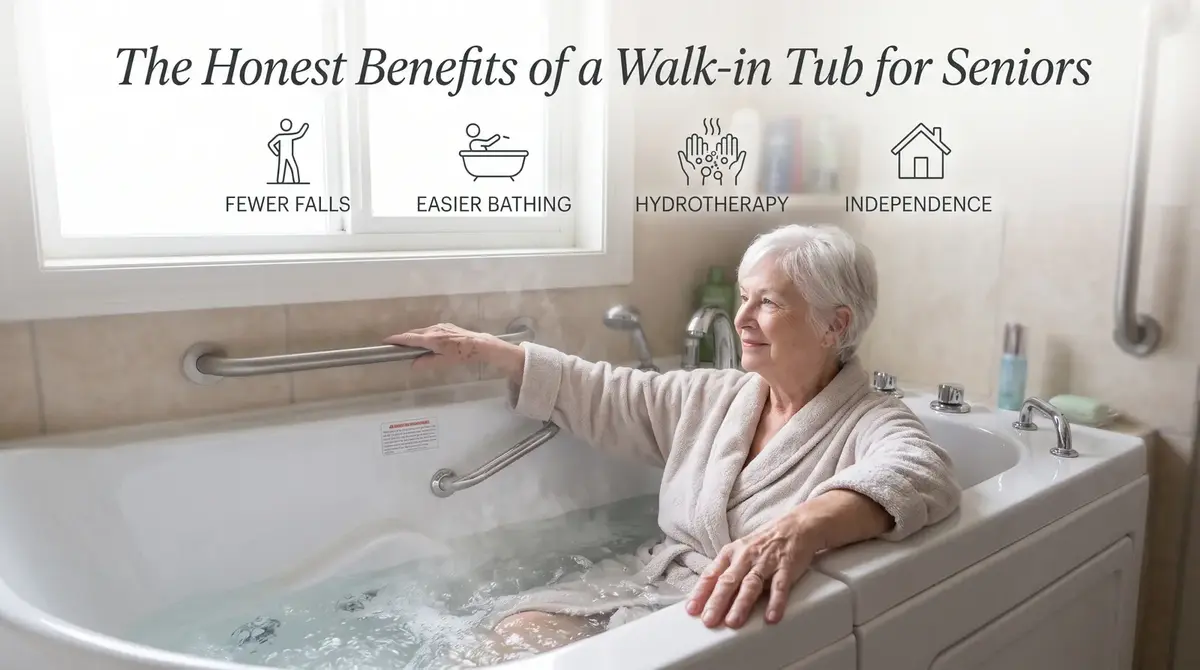
For a lot of older adults, the bathroom is the scariest room in the house. Climbing over a high tub wall onto a slippery, wet surface is exactly how a fall in the bathroom happens. A walk-in tub is built to remove that risk — and the benefits for seniors go well beyond safety. Here's an honest look at what a walk-in tub actually does for you or the person you care for, including a few trade-offs worth knowing.
Safer bathing and fewer falls
The biggest benefit is simple: far fewer chances to fall. Instead of stepping over a high tub wall, you open a door and walk in over a low threshold. A built-in seat lets you sit instead of lowering yourself to the floor, grab bars give you something solid to hold, and a non-slip floor keeps your footing. These safety features work together so a senior can bathe without the fear that comes with a standard tub.
Easier on aging bodies and limited mobility
A walk-in tub meets you where your body is. Sitting at seat height instead of dropping to the bottom of the tub spares your hips, knees, and back. The low, wide entry makes it easy to enter and exit even with a walker or limited mobility. For anyone with arthritis or other mobility challenges, that difference is what keeps bathing something you can do on your own.
Therapeutic benefits: warm water and jets
A walk-in tub isn't just safer — it can feel genuinely good. A deep, warm bath eases stiff joints and helps you relax before bed. Add hydrotherapy jets and the benefits grow: the targeted jets and gentle water movement can soothe arthritis pain, improve circulation, and turn a daily bath into real relaxation. Many seniors say the therapeutic benefits of soaking in a walk-in tub are the part they look forward to most.
Independence, dignity, and peace of mind
Bathing is private, and keeping it that way matters. Because a walk-in tub lets many seniors bathe safely on their own, it protects independence and dignity — and it gives family and caregivers real peace of mind. For households trying to age in place, that combination is often what makes staying in the family home possible.
Walk-in tub vs. a standard tub or shower
Compared with a traditional bathtub, a walk-in tub trades the dangerous climb for a low door and a seat, and adds warm-water therapy a shower can't match. A walk-in shower or a tub and shower setup is a fine choice if you mostly want a quick, seated rinse, but if a warm bath matters to you, the tub wins. If you're weighing models, our guide to the best walk-in tubs for seniors compares the options.
Who benefits most?
Walk-in tubs are designed for older adults and anyone with mobility challenges, arthritis, or a history of falls. If getting in or out of the tub already feels risky, or a caregiver is helping with every bath, a walk-in tub usually pays for itself in safety and independence alone.
The trade-offs (pros and cons)
To be fair about the pros and cons of walk-in tubs: you sit while the tub fills and drains, so there's a short wait unless the model has a fast-drain system; the upfront cost is higher than a standard tub; and it needs a professional to install. For most seniors the safety and comfort outweigh those cons, but they're worth knowing before you decide. For the numbers, see our breakdown of walk-in tub cost in Las Vegas.
Ready to explore a walk-in tub?
If the benefits sound like what you or your parent needs, the next step is installing a walk-in tub. Our main guide to walk-in bathtub installation in Las Vegas covers the process end to end, and Bathroom Brad — a local wet-area specialist — can walk you through it in your own home.
The top benefits of a walk-in tub, at a glance
If you're weighing whether a walk-in tub is worth it, here's the short version. Falls are a leading cause of injury among seniors — about one in four seniors has a fall each year, and slips and falls often happen stepping over the side of the tub. A walk-in tub removes that risk of falling: you enter and exit the tub through a low door instead of a traditional tub wall, sit on a non-slip tub floor, and take a safe, warm bath in comfort. Because it's a smaller change than a full bathroom remodel, many seniors choose a walk-in bath as a simple upgrade rather than a big remodel. Models range widely, so choosing a walk-in tub means matching a new walk-in tub to your bathroom layout, budget, and mobility. For most older adults, a well-chosen walk-in tub is a smart investment in years of safer, easier bathing — and we're happy to help you decide among the range of walk-in tubs and tub models that fit.
Walk-in tub benefits FAQs
Are walk-in tubs good for seniors? Yes. For seniors with limited mobility or a fall risk, the low entry, built-in seat, grab bars, and non-slip floor make bathing far safer than a standard tub.
Do walk-in tubs help with arthritis? They can. A warm bath plus hydrotherapy jets soothe stiff, painful joints, which is why many people with arthritis choose a jetted model.
What are the downsides? Mainly the wait while the tub fills and drains, a higher cost than a standard tub, and the need for professional installation.
Can a walk-in tub help me stay in my home? Often, yes — by making bathing safe and independent, it's one of the changes that helps seniors age in place.
Want to see if a walk-in tub is right for your situation? We'll come take a look and give you a straight answer, no obligation.