
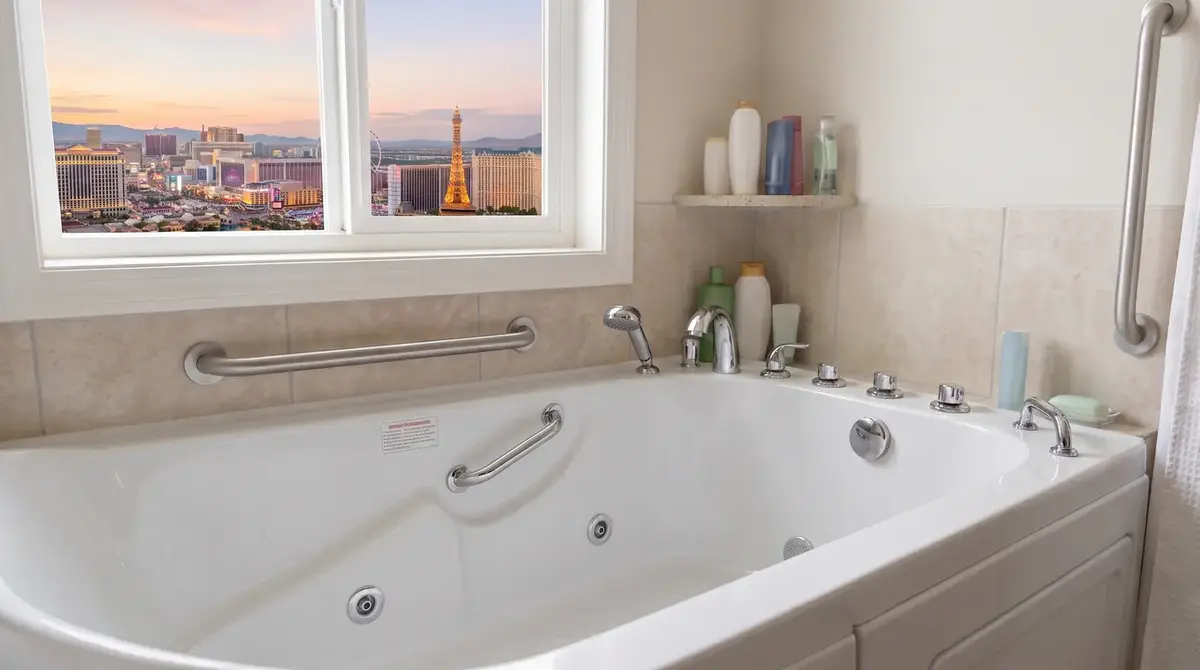
Shopping for a walk-in tub for an aging parent, or for yourself, gets confusing fast. Every brand says it makes the best one, prices are all over the place, and the feature lists read like a foreign language. This guide sorts it out: the types of walk-in tubs, the features that actually matter for an older body, how to match a tub to the person who will use it, and when a walk-in tub is not the right answer at all.
We install walk-in tubs from several manufacturers, so nothing here is a pitch for one brand. The goal is to help you pick the tub that fits the person, the bathroom, and the budget.
What makes a walk-in tub good for a senior
Every good walk-in tub gets five safety basics right. If a model misses any of these, keep looking.
- A low step-in threshold. A few inches, not a wall to climb. This removes the single riskiest moment of a bath.
- A chair-height seat. You sit down and stand up like you would from a kitchen chair, instead of lowering yourself to the tub floor.
- Grab bars where your hands land. Near the door, beside the seat, and by the controls.
- A textured, non-slip floor. It should be comfortable barefoot and still grip when wet.
- Controls you can reach while seated. Faucet, drain, and jets all within arm's reach, so nobody twists or stretches mid-bath.
Everything else, from jets to heated backrests, is comfort. Comfort matters, but it comes second.
Types of walk-in tubs
Most of the choice comes down to two questions: how the tub treats the water, and how the person gets in.
Soaking tubs
The simplest and most affordable walk-in bathtub. A deep, warm soak with no jets. If the main goal is getting in and out safely and enjoying a warm bath, a soaker does the job and has the fewest parts to maintain.
Air-jet tubs
Air jets push thousands of small, warm bubbles through the water for a gentle, all-over massage. They feel soft rather than intense, which suits sensitive skin and anyone who finds strong jets uncomfortable.
Water-jet (hydrotherapy) tubs
Water jets aim pressurized water at specific areas like the back, hips, and legs, much like a whirlpool. This is the type most people with arthritis or chronic joint pain end up choosing, because the targeted pressure is what loosens stiff muscles.
Combination tubs
Both air jets and water jets in one tub, so you can switch between a light bubble soak and a deeper hydrotherapy session. More features, more cost, and more to maintain.
Walk-in tubs with a shower
A walk-in tub with a shower adds a handheld shower wand, and sometimes a fixed showerhead, so the same tub works two ways: a seated soak, or a quick rinse without waiting for the tub to fill. This is the best choice when two people share the bathroom and only one of them wants a tub, or when the user wants to rinse their hair after the water drains.
Look for a handheld wand on a slide bar, so it can be set at seated height, and a glass panel or curtain above the door to keep spray in the tub.
Wheelchair-accessible tubs
For someone who transfers from a wheelchair, an outward-swinging door and a side-entry seat make the move from chair to tub much easier. The door swings out of the way, the chair pulls up alongside, and the person slides across. These need more floor space in front of the tub, so they are worth measuring for early.
Bariatric tubs
Wider seats, wider doors, and higher weight capacity. If comfort or weight is a concern, a bariatric model is safer than squeezing into a standard tub, because a seat that is too narrow makes standing up harder.
Features that matter most for seniors
Once you know the type, a handful of details separate a good tub from a great one for an older adult.
Door swing. An inward-swinging door is sealed tight by the water pressure, and most standard models use one. An outward-swinging door is easier for wheelchair transfers and for caregivers, because nobody has to step around it. Choose based on how the person enters, not on the brochure.
Fast drain. You stay in the tub while it fills and while it drains, so drain speed decides how long you sit wet and cooling off. A fast-drain system is one of the most worthwhile upgrades on any walk-in tub.
Heated seat and backrest. These keep you warm during the fill and drain. For anyone who gets cold easily, they turn the wait from unpleasant to fine.
Anti-scald protection. A thermostatic or pressure-balancing valve stops sudden hot-water spikes. That matters for anyone with reduced sensation in their hands or feet, which is common with diabetes, and it matters in Las Vegas, where tap water can come out hot fast in summer.
Controls you can work with weak hands. Big levers and clearly marked buttons beat small knobs. Try the latch yourself before you buy. If it takes a grip the user doesn't have, it is the wrong tub.
Warranty. A long manufacturer warranty on the door seal and the tub shell tells you the maker stands behind it. Ask what it covers, and who you call if the seal leaks.
How the major walk-in tub brands compare
Names you will run into include Kohler, American Standard, Safe Step, and Ella's Bubbles, among others. The honest truth is that most established brands build a safe, capable tub. The real differences are in:
| What to compare | Why it matters |
|---|---|
| Step-in height | Lower is safer. A difference of an inch or two matters to someone with limited mobility. |
| Seat height and width | It should match the person's body, just like a chair. |
| Door type and swing | Inward seals by water pressure. Outward is easier for transfers. |
| Jet options | Soaker, air, water, or combination. Pay only for what will be used. |
| Drain speed | Decides how long you sit wet after the bath. |
| Warranty terms | Shell, door seal, jets, and labor are often covered differently. |
| Installer | A well-installed mid-range tub beats a badly installed premium one. |
Some brands sell only through their own sales teams. Others are available through independent installers. Either way, the tub is only as good as the installation: a tub that isn't set dead level won't drain fully and puts stress on the door seal over time.
Is a walk-in tub the right choice at all?
A walk-in tub is the right answer for some people and the wrong one for others. It is worth being honest about that before anyone spends money.
A walk-in tub fits best when the person enjoys baths, has arthritis or joint pain that warm water and jets ease, can sit and stand from a chair-height seat, and doesn't mind waiting while the tub fills and drains.
A walk-in shower may fit better when the person mostly wants to get clean quickly, uses a wheelchair full time and needs a roll-in entry, or finds the fill-and-drain wait uncomfortable. A low-threshold or curbless walk-in shower with a bench and grab bars is often quicker to install and costs less. Our guide to a handicap shower conversion in Las Vegas covers that route.
A tub cut-out may be enough when the person is still steady on their feet and the only problem is the height of the tub wall. A cut-out removes a section of the wall to create a step-through opening. It is a short-term fix rather than a long-term one, as our comparison of a quick tub to shower conversion explains.
If you are still weighing whether a walk-in tub is worth it, walk-in tub benefits for seniors lays out who gains the most.
Matching the tub to the person
The best walk-in tub for a senior is matched to the individual, not to the advertisement. A few common situations:
- Arthritis or chronic joint pain: a water-jet or combination tub, a heated seat, and easy-lever controls.
- Balance problems but otherwise mobile: a soaker with the lowest step-in you can find, a fast drain, and grab bars on both sides of the door.
- Wheelchair user who can transfer: an outward-swinging door, a side-entry seat, and enough clear floor space for the chair to pull alongside.
- Caregiver helps with bathing: simple controls, a handheld shower for rinsing, and a door that opens away from where the caregiver stands.
- Two people share the bathroom: a walk-in tub with a shower, so the other person can still shower standing.
- Larger body frame: a bariatric model with a wider seat and door.
Measure the person as well as the bathroom. Seat height, step-in height, and door width all need to work for the actual body using the tub.
What the best walk-in tubs cost
Installed walk-in tubs in the Las Vegas area mostly run $10,000 to $30,000. A basic soaker sits at the low end, jetted models in the middle, and premium combination tubs at the top. The installation is a real part of that number, because a walk-in tub is heavier and deeper than a standard tub and often needs plumbing changes and a dedicated electrical circuit. Our walk-in tub cost in Las Vegas guide breaks down each tier.
How to choose the right walk-in tub for your home
The best tub on paper is the wrong one if it doesn't fit the room. Before you settle on a model:
- Measure the space. Most walk-in tubs fit a standard 60-inch alcove, but wheelchair-accessible and bariatric models need more room.
- Check the path in. The tub has to fit through the front door, down the hall, and into the bathroom.
- Check the water heater. A walk-in tub holds more water than a standard tub. An undersized water heater means a lukewarm bath.
- Check the electrical. Jetted and heated tubs need a dedicated circuit.
- Try the controls. Have the person who will use the tub work the latch and controls before you order.
When you are ready to have one fitted, our guide to walk-in tub installation in Las Vegas walks through every step of the job.
Why choose Bathroom Brad
Wet spaces are all we do: tubs, showers, and walk-in tubs. We help families across Las Vegas, Henderson, and Summerlin choose the right tub for the person who will use it, install it with our own crew, and back the workmanship with a lifetime warranty on top of the manufacturer's warranty. No single-brand sales pitch and no today-only price. See our walk-in tubs in Las Vegas page for how we work.
Best walk-in tubs for seniors: FAQs
What type of walk-in tub is best for seniors?
The best type depends on the person. A soaker suits someone who mainly wants to bathe safely. A water-jet or combination tub suits someone with arthritis or joint pain. A wheelchair-accessible tub with an outward door suits someone who transfers from a chair.
Which walk-in tub is best for arthritis?
A water-jet (hydrotherapy) or combination tub, ideally with a heated seat. The targeted water jets ease stiff joints better than a plain soak, and the heated seat keeps you warm during the fill and drain.
Can you get a walk-in tub with a shower?
Yes. Many walk-in tubs come with a handheld shower wand, and some add a fixed showerhead. It lets the same tub work as a seated soak or a quick rinse, which helps when two people share the bathroom.
Are more expensive walk-in tubs safer?
Not necessarily. Safety comes from the low step-in, the chair-height seat, grab bars, and a non-slip floor, which you will find at every price point. The extra cost mostly buys jets, heating, door design, and drain speed.
What is the best brand of walk-in tub?
There is no single best brand for everyone. Most established brands build a safe tub. The best one is the model whose step-in height, seat, door, and jets fit the person using it, installed level and sealed properly.
Is a walk-in tub or a walk-in shower safer for the elderly?
Both are far safer than stepping over a standard tub wall. A walk-in shower is usually better for full-time wheelchair users and for people who want a quick wash. A walk-in tub is better for people who value a warm, seated soak, especially for joint pain.
Do walk-in tubs add resale value?
They make a home more accessible to older buyers, which is a real selling point in a market with many retirees, as long as the home keeps a standard tub or shower elsewhere for buyers who want one.
Not sure which tub fits? We will come look at your bathroom, meet the person who will use it, and help you choose. No obligation and no sales pitch.