
Two things are usually true at once for the homeowner asking this. You have not filled that bathtub in years and you know it. And some part of you thinks removing a tub is a thing you are not supposed to do — that it will hurt resale, or that you will want it back the moment it is gone.
Often there are two people involved and they do not agree. One is tired of climbing over a wall to take a shower. The other cannot quite let go of the idea of a bath, even though nobody has taken one since 2019.
So rather than sell you on it, here is the honest version: five real reasons to convert, the four situations where you should not, and a straight answer on the resale question everyone worries about.
1. Safety and Mobility
This outranks everything else. A traditional bathtub wall is 14 to 16 inches high. Lifting a leg over it while balancing on a wet surface is the most dangerous movement most people make in their home each day, and it quietly gets harder every year.
A walk-in shower removes the step or reduces it to a low curb. Add safety features while the wall is open — grab bars anchored into real blocking, a bench, a handheld on a slide bar, slip-resistant flooring — and a bathroom that was working against you starts working for you. If this is the whole reason you are looking, handicap shower conversion in Las Vegas covers the accessibility specifics.
2. You Get the Bathroom Back
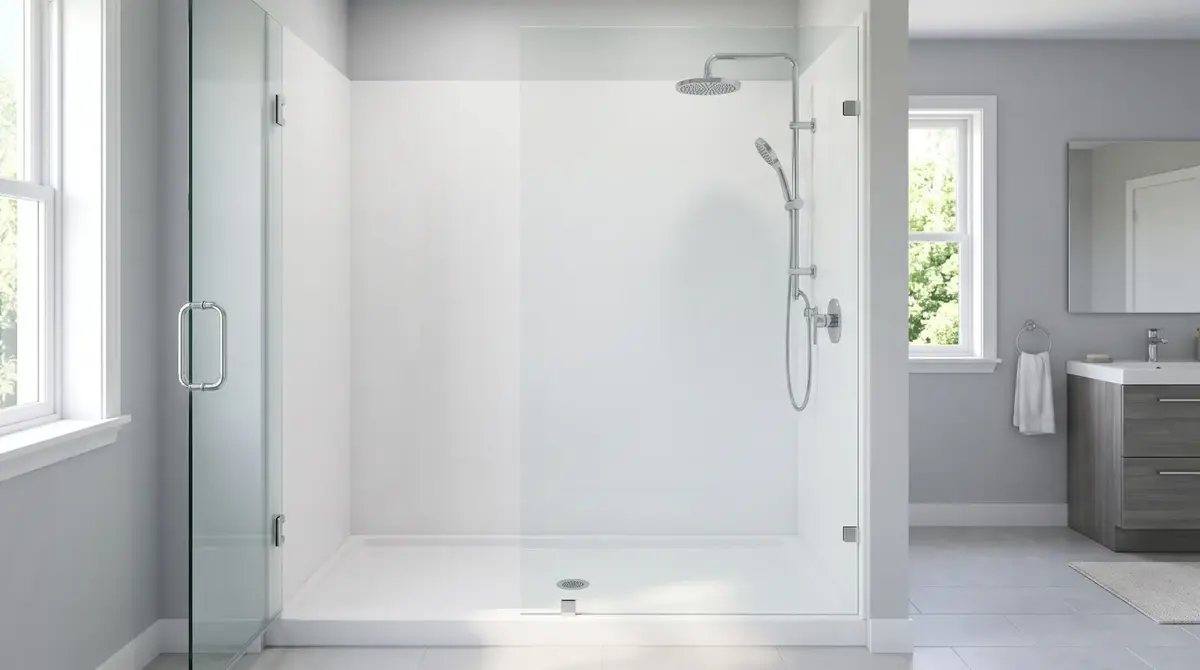
Removing a tub frees floor area, but the bigger gain is sight lines. A clear enclosure lets the eye travel to the back wall, and a small bathroom reads dramatically larger. Same footprint, different room.
That space also allows things a tub never did: a bench, a larger niche, a second showerhead, a corner shelf that is not balanced on the tub rim.
3. Far Less Cleaning
Anyone who has scrubbed a tub-shower combo knows. You are cleaning a horizontal surface, a vertical surface, a sliding door track, and a ring of grout, in a space too small to stand in. Mildew lives in exactly those places.
A modern grout-free shower with a single panel has almost none of that. Fewer seams, no track, nothing porous. For plenty of homeowners this turns out to be the benefit they notice weekly — more than the safety gain they bought it for.
4. A New Shower Fits How You Actually Live
Be honest about the daily routine. If nobody has taken a bath in two years, the bathtub is not a feature, it is stored water occupying the best square footage in the room. Converting it simply acknowledges what the household already does.
Many people also use the moment to make the space feel spa-like — better fixtures, a rainfall head, tile or solid surface walls that read like a hotel rather than a builder special. That is a legitimate reason on its own.
5. Resale Value: The Straight Answer
An updated, accessible wet area is a genuine selling point, particularly in markets with older buyers. Agents treat a modern shower as an upgrade over a dated tub-shower combo.
The rule that matters: keep at least one bathtub in the home. Families with small children will walk out of a house with none, and that is a real slice of the buyer pool. With a second bathroom that has a tub, converting the primary is close to a straight win on resale value. If it is your only one, think harder.
That is the whole resale answer. It is less complicated than the internet makes it, and it is the single fact that resolves most disagreements between two people standing in a bathroom.
When You Should Not Convert Your Tub
- It is the only bathtub in the home and you may sell within a few years.
- You have young children. Bathing a toddler in a walk-in shower is genuinely miserable. Wait a few years.
- You actually take baths. Some people find a long soak worth the floor space. That is a real answer, not a failure of nerve.
- You want the soak and the safety. Then the right fixture is a walk-in tub, not a shower — see walk-in bathtub installation.
We would rather tell you to keep the bathtub than sell you a renovation you regret. It happens a few times a year.
Bathtub or Walk-In Shower: Quick Comparison
| Traditional bathtub | Walk-in shower | |
|---|---|---|
| Accessibility | High step over | Low or zero threshold |
| Cleaning | Grout, door track, tub floor | Fewer seams, faster |
| Perceived space | Closes the room in | Opens it up |
| Small children | Better | Difficult |
| Resale | Needed — at least one bathtub in the home | Upgrade, if a tub exists elsewhere |
Choosing Between a Tub or Shower in Each Bathroom
The answer for most homeowners is not all-or-nothing. Decide room by room. Convert your tub in the primary bath, where the daily routine happens and where mobility matters most, and leave the guest or hall bath as a bathtub or shower combo for children and resale.
That split gives you accessibility where you need it and keeps one bathtub in the home for buyers who want one. It also tends to be the compromise that settles a household disagreement, because nobody has to lose the argument outright. When we install your new shower in the primary, we can match finishes to the rest of the house so the two rooms still read as one bathroom remodel rather than a patch job.
What to decide before demolition
- Shower base size — stay in the footprint or expand
- Shower door or a fixed panel, framed or frameless
- Wall finish — tile or grout-free panels
- Fixtures and showerheads, including whether you want a handheld
- Grab bar placement, decided now while the wall is open
What the Bathroom Remodel Involves
A tub-to-shower conversion is a contained remodel, not a full bathroom renovation. We remove the old fixture, inspect and repair framing and subfloor, install a new shower base, waterproof, and finish the walls in tile or a grout-free panel system. Most jobs stay in the original footprint, which keeps the plumbing and the price where they are.
Timeline is usually one to two days. For what drives the number, see tub to shower conversion cost. For local work, our tub to shower conversion in Las Vegas page, and if speed is the priority, quick tub to shower conversion.
Frequently Asked Questions
Will replacing a bathtub hurt my home value?
Not if another bathtub remains in the home. Removing the last one narrows your buyer pool, mainly among families with young children.
Can I convert my tub and keep the same footprint?
Almost always. A standard alcove is 60 inches, which makes a comfortable shower with no framing changes.
Is a walk-in shower safer than a tub?
Substantially — provided it is built for it. Low threshold, grab bars, slip-resistant floor. A curbless shower with a slick floor and nothing to hold is not an improvement.
We disagree about this. Any advice?
Check whether the house has another tub. If it does, most of the objection is sentiment rather than practicality, and sentiment is usually satisfied by keeping the guest bath as it is. If it does not, the person arguing to keep the bathtub has the stronger case.
How much bigger will the bathroom feel?
The square footage does not change, but with a clear enclosure most people describe the room as feeling about a third larger.
Do I need to re-tile the whole bathroom?
No. The conversion is confined to the wet area. Floors and walls outside it stay.
Bathtub or Walk-In Shower: The Short Answer
If your household does not take baths, and at least one tub remains somewhere in the house, replace it. You get a safer, more open, far easier-to-clean bathroom for a fraction of a full remodel.
If you have toddlers, or it is the only bathtub in the home and you are selling soon, wait. The tub is doing a job you will miss.